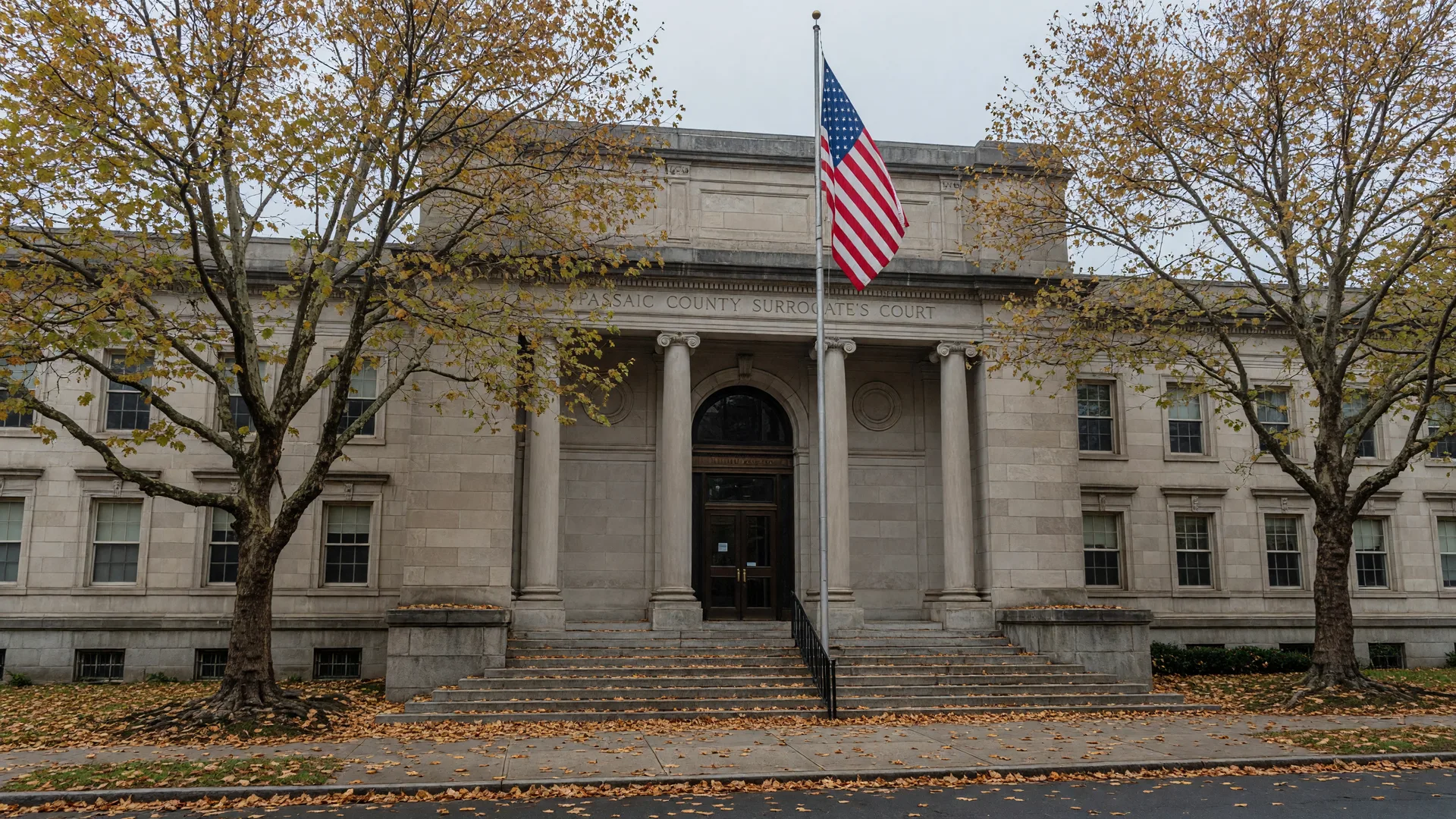
If you have lost a loved one and are now responsible for their property in Passaic County, one of the first questions on your mind is probably: how long is this going to take? The honest answer is that most probate cases in Passaic County take between six and twelve months from start to finish, but the exact timeline depends on whether there is a will, how complex the estate is, and how quickly paperwork moves through the Surrogate's Court. Understanding the realistic timeline helps you plan, reduce stress, and take the right steps at the right time.
What is the average probate timeline in Passaic County?
Passaic County Surrogate's Court, located at 71 Hamilton Street in Paterson, handles all probate filings for the county. The court processes thousands of estate filings each year, and the speed of the process depends on both the court's workload and the complexity of the estate.
For a straightforward, uncontested estate, meaning there is a valid will, the executor cooperates, and all heirs are in agreement, the typical timeline looks like this:
Passaic County Probate Timeline: What to Expect
Filing the Will and Executor Appointment (2 to 6 weeks)
After filing the will with the Passaic County Surrogate's Court, the executor is formally appointed and receives Letters Testamentary. For a valid, self-proving will, this step is usually quick. Filing fees start at approximately $100.
Creditor Notice Period (Minimum 9 months)
New Jersey requires a minimum nine-month waiting period for creditors to file claims against the estate. This is one of the longest fixed waiting periods in the country and is the primary reason probate takes time, even in simple cases.
Inheritance Tax Waiver (4 to 12 weeks)
The executor must obtain a tax waiver from the New Jersey Division of Taxation before real property can be transferred. This step is required for virtually all real estate closings in probate and typically takes one to three months.
Asset Distribution and Estate Closing (1 to 3 months)
Once debts are paid, taxes are settled, and all waivers are obtained, the executor distributes remaining assets and files a final accounting with the Surrogate's Court.
In total, a simple estate in Passaic County typically wraps up in roughly nine to twelve months. When disputes, multiple properties, or missing paperwork enter the picture, the process can extend to eighteen months or longer.
What speeds up, or slows down, probate in Passaic County?
No two probate cases are identical. Several factors can either shorten or extend the timeline significantly. Understanding them helps you set realistic expectations and take steps to keep things moving.
Factors that slow things down
- Contested wills or disputes among heirs. When beneficiaries disagree about the validity of the will, the distribution of assets, or the sale of property, the matter may go to court. Litigation can add months or even years to the probate process.
- Complex or large estates. Estates with multiple properties, business interests, retirement accounts, or assets in multiple states often require additional legal filings and coordination, which extends the timeline. Families with multi-family homes, common in Passaic and Paterson, may face additional complexity if tenants are involved.
- Court backlogs at the Surrogate's Court. The Passaic County Surrogate's Court handles a high volume of cases, especially during peak filing periods early in the year. Processing delays of several weeks can occur during busy seasons.
- Delays in obtaining the tax waiver. The NJ Division of Taxation can be slow to process inheritance tax waiver requests, particularly for larger or more complex estates. Incomplete filings or missing documentation can cause additional delays of weeks or months.
- Missing or incomplete documentation. If the original will cannot be located, if death certificates are delayed, or if property records are unclear, the court may require additional steps before proceeding. This is especially common with older homes in Passaic County where deed records may have gaps.
Factors that speed things up
- A clear, valid will. When the will is straightforward and clearly names an executor, the appointment process moves quickly, often within two weeks.
- Cooperative heirs. When all beneficiaries are aligned and in agreement about the estate, there is far less chance of delays or litigation. Communication among family members is critical.
- An experienced probate attorney. Having a knowledgeable attorney handle the filings, respond to court requirements promptly, and anticipate issues can prevent many common delays.
- Organized paperwork. Having the death certificate, will, property documents, mortgage statements, and tax records organized from the start saves weeks of back-and-forth.
Testate vs. intestate: how the will affects your timeline?
Whether the deceased person left a valid will (testate) or died without one (intestate) has a direct impact on the probate timeline in Passaic County. Understanding the difference helps families set realistic expectations and plan accordingly.
Testate: with a valid will
When there is a valid will, the process moves faster. The will names an executor, the Surrogate's Court validates the will and formally appoints that executor, and Letters Testamentary are issued. In Passaic County, this appointment typically takes two to six weeks for an uncontested estate.
A self-proving will, one that was signed before a notary public with witness signatures, eliminates the need for witness testimony, which speeds things up further. If the will is not self-proving, at least one of the original witnesses may need to appear at the Surrogate's Court.
For a straightforward testate estate, the overall timeline from filing to closing on a property sale is typically nine to twelve months. The nine-month creditor notice period is a fixed requirement regardless of whether there is a will.
Intestate: without a will
When someone dies without a valid will, New Jersey's intestacy laws determine who has legal priority to administer the estate. The Surrogate's Court appoints an administrator, usually the surviving spouse, a child, or another close relative, and issues Letters of Administration instead of Letters Testamentary.
The intestate process is generally slower for several reasons. The court must determine who has priority to serve as administrator. Additional heirs may need to be identified and notified. If there is disagreement among family members about who should serve, the process can become contested, adding significant time and legal cost.
In Passaic County, administrator appointment typically takes four to eight weeks, two to four weeks longer than a standard testate filing. The filing fee is also slightly higher, starting at a minimum of $125 compared to approximately $100 for a will filing. The practical impact on selling a property is significant: an intestate estate cannot move forward with a sale until the administrator is formally appointed, so families without a will should plan for a longer preparation period.
Testate vs. Intestate: Passaic County Comparison
Appointment Speed
Testate: 2 to 6 weeks. Intestate: 4 to 8 weeks. The court must determine heir priority when no executor is named in a will.
Filing Fees
Testate: starts at approximately $100. Intestate: minimum $125. Additional fees may apply for more complex filings.
Dispute Risk
Testate: lower dispute risk when the will clearly names an executor and outlines distribution. Intestate: higher risk of family disagreement over who administers the estate and how assets are divided.
Property Sale Timeline
Testate: typically 9 to 12 months from filing. Intestate: typically 12 to 18 months, with the potential for longer if disputes arise among heirs.
How property condition affects the timeline.
The condition of the inherited property plays a larger role in the probate timeline than many families realize. While the legal process moves on its own schedule, the practical steps of assessing, preparing, marketing, and closing on a property can either add weeks or shave them off the total timeline.
- Homes in good condition. If the property is in relatively good shape, minor cosmetic updates, basic cleaning, no major structural issues, it can be assessed, priced, and listed within days of the executor receiving Letters Testamentary. These properties often sell within 30 to 60 days on the market.
- Homes needing significant repairs. Properties with deferred maintenance, outdated systems, or code violations require more preparation before listing. In Passaic County, code violations, especially for row homes and multi-family properties, can add weeks of remediation or disclosure work. However, many families choose to sell as-is to avoid these delays entirely.
- Hoarder houses or heavily cluttered properties. Estates with significant accumulation require professional cleanout before the property can be photographed, shown, or accurately assessed. Cleanout alone can take one to four weeks depending on the scale, and should be factored into the overall timeline.
- Properties with environmental issues. Lead paint, asbestos, or mold, common in older Passaic County homes, may require professional inspection and disclosure. These issues do not necessarily prevent a sale, but they add steps that must be completed before closing.
The key takeaway is that property condition affects how quickly you can list and close, not the legal probate timeline itself. Families who begin preparing the property as early as possible, even before Letters Testamentary are issued, are in the strongest position to sell quickly once the legal authority is in place.
Can you sell the property during probate?
This is one of the most important questions for families who need or want to sell an inherited home in Passaic County. The short answer is: yes, but only after certain legal milestones have been met.
In New Jersey, you generally cannot sell the property until the executor has been formally appointed by the Surrogate's Court and has received Letters Testamentary (or Letters of Administration). Once those letters are issued, the executor typically has the legal authority to sell real property, provided the will does not restrict the sale and all state requirements are met.
The closing itself usually cannot happen until the inheritance tax waiver has been obtained from the New Jersey Division of Taxation. However, in many situations, the property can be listed, marketed, and even have a buyer under contract while the waiver is still being processed. Funds can sometimes be held in escrow at closing until the waiver is finalized.
This means you can often list the property and move forward with the sale process well before the entire probate matter is officially closed. The timeline for court approval, if required, depends on whether the estate is under formal court supervision. In unsupervised estates, which are more common for straightforward cases in Passaic County, no separate court order is needed to sell once Letters Testamentary are issued. In supervised estates, the court may need to review and approve the sale, which can add two to six weeks.
Selling During Probate: Key Timeline Milestones
Property Can Be Listed
Once the executor receives Letters Testamentary, typically 2 to 6 weeks after filing, the property can be listed for sale. Preparation steps like cleaning, repairs, and pricing can begin even earlier.
Buyer Under Contract
A buyer can go under contract while the inheritance tax waiver is still being processed. This overlap saves significant time. Typical listing period: 30 to 90 days.
Court Approval (if required)
Estates under formal court supervision require court approval of the sale, adding 2 to 6 weeks. Most straightforward estates in Passaic County are unsupervised and do not require this step.
Closing
Once the tax waiver is in hand (or funds are held in escrow), closing typically takes 30 to 45 days. From listing to closing, a well-managed probate sale takes roughly 3 to 6 months.
Tips for executors to keep probate on schedule.
If you have been named as executor of an estate in Passaic County, you play a central role in how quickly the process moves. While you cannot control every aspect of the timeline, there are practical steps that make a meaningful difference.
- File the will immediately. Every day that passes between the death and the filing of the will is a day that delays the entire process. Gather the original will, order several certified copies of the death certificate, and bring everything to the Passaic County Surrogate's Court as soon as possible. Remember that the court cannot begin processing the filing until at least 11 days after the date of death.
- Hire a probate attorney early. New Jersey probate law has specific requirements and deadlines. An experienced attorney ensures filings are correct the first time, handles the inheritance tax waiver application, and can flag potential issues before they become costly problems.
- Gather all property documents now. Locate mortgage statements, property tax bills, insurance policies, HOA documents, utility bills, and any code violation notices. Having these organized when your attorney or agent needs them prevents weeks of delay.
- Communicate openly with other heirs. Disagreements are one of the biggest sources of delay in probate. Have honest conversations early about the goals for the estate, whether that means selling the property, keeping it, or finding a middle ground.
- Secure the property. Change the locks, maintain utilities, keep insurance active, and ensure the property is safe and accessible. An unsecured or deteriorating property creates complications that slow down the sale process.
- Start preparing the property for sale while probate is pending. You do not have to wait until probate is fully closed to begin getting a property ready. Cleaning out the home, making minor repairs, and connecting with a probate-specialized real estate agent can put you in a strong position to list as soon as the legal authority is in place.
How working with a probate-certified agent reduces delays.
One of the most effective ways to keep a probate property sale on schedule is working with a real estate agent who specializes in probate transactions. A standard listing agent may not understand the legal process, the court requirements, or the unique timeline constraints that come with selling inherited property in Passaic and Bergen Counties.
A probate-certified agent brings specific knowledge that directly reduces delays:
- Early market assessment. A probate-certified agent can evaluate the property, review comparable sales, and provide a preliminary pricing strategy before Letters Testamentary are issued. This means the property is ready to list the day legal authority is in place, no lost weeks.
- Coordination with estate attorneys. Probate sales require close communication between the agent and the attorney. The agent needs to know when legal authority is in place; the attorney needs to know the status of the sale and any buyer contingencies. This coordination prevents miscommunication and missed deadlines.
- Understanding of court-supervised sales. If the estate requires court approval for the sale, a probate-certified agent knows how to prepare the necessary documentation, present the sale to the court, and manage the additional timeline requirements without unnecessary delays.
- Access to qualified buyers. In Passaic and Bergen Counties, probate properties attract owner-occupants, investors, and cash buyers. A probate-certified agent knows how to market to all three groups and identify the buyer profile that best fits the estate's timeline and financial needs.
- Title issue awareness. An agent experienced with probate sales knows to flag potential title problems, unreleased mortgages, tax liens, deed discrepancies, early, before a buyer is under contract. This proactive approach prevents surprises that can delay or derail the closing.
Johnny Rodriguez is a Probate Certified Specialist with ABR (Accredited Buyer's Representative) and SFR (Short Sales and Foreclosure Resource) designations, serving Passaic and Bergen County families through Realty One Group Legend. With over 15 years of experience in the local market and a deep understanding of the Surrogate's Court process, he helps families keep probate sales on schedule from day one.
Questions about the probate timeline in Passaic County?
Every estate is different, and the timeline depends on your specific situation. If you have inherited a property in Passaic or Bergen County and want to understand what to expect, a free consultation can give you the clarity you need. Johnny Rodriguez is a Probate Certified Specialist (ABR, SFR) with Realty One Group Legend, serving families throughout Passaic, Bergen, Essex, and Hudson Counties for over 15 years.

Johnny Rodriguez
ABR, SFR, Probate Certified Specialist · Realty One Group Legend · Licensed in New Jersey
Serving Passaic and Bergen County families through probate for over 15 years.
Related Reading