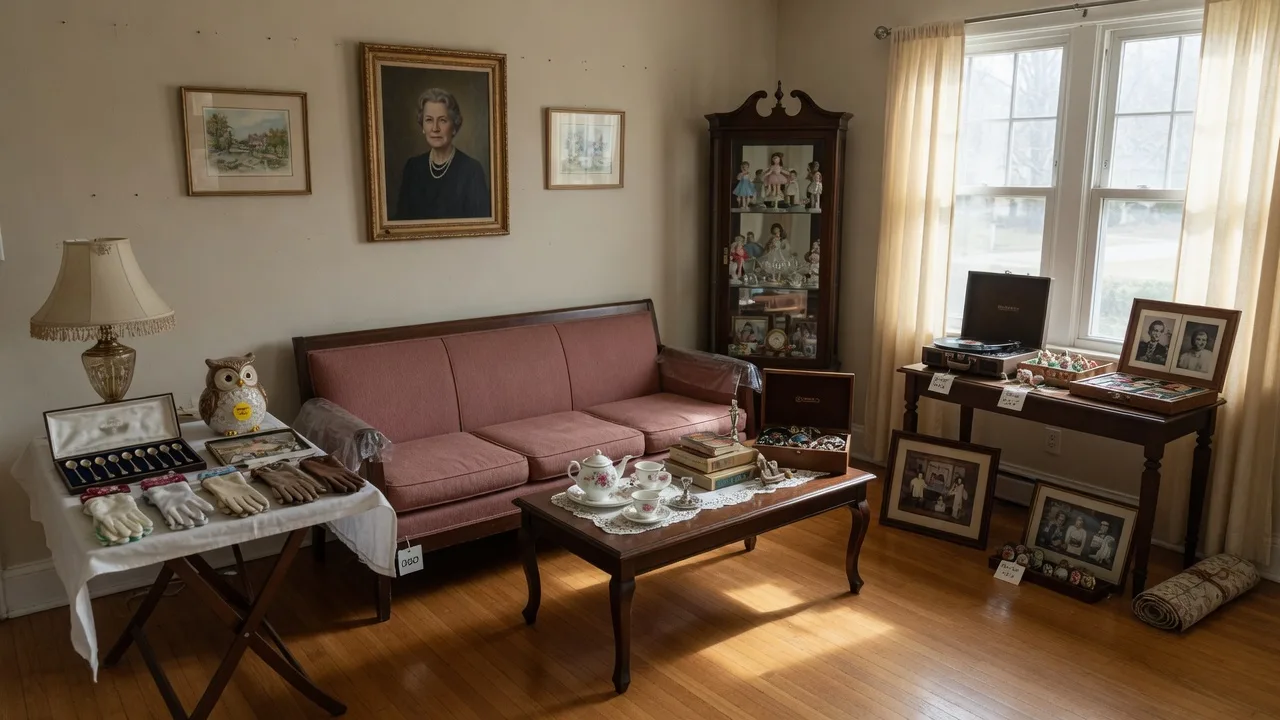
Estate Sales
in North Jersey.
Everything executors and heirs need to know about estate sales in New Jersey, from laws and court requirements to timelines, costs, and how to choose the right approach for your family.
What Is an Estate Sale?
An estate sale is a public or private sale of the personal property belonging to a deceased person's estate. Unlike a traditional garage sale or yard sale, estate sales are typically organized and managed by a professional estate sale company or the executor of the estate, and they involve a much wider range of items, from furniture, appliances, and household goods to collectibles, antiques, jewelry, artwork, and vehicles.
The key distinction: an estate sale primarily handles the contents of a home, the personal belongings left behind. The sale of the real property (the house itself) is a separate transaction that follows a different legal process, typically involving a real estate agent and the probate court system.
For families in Passaic, Bergen, Essex, and Hudson Counties, estate sales are often one piece of a larger estate settlement process. Understanding how they fit into the bigger picture helps executors make informed decisions about timing, cost, and which items should be sold at an estate sale versus kept, donated, or handled differently.
Estate Sale vs. Probate Sale: What's the Difference?
Estate Sale
- • Sells the personal property inside the home, furniture, collectibles, vehicles, household items
- • Can be run by an estate sale company, auction house, or the executor
- • May or may not require court approval depending on whether the estate is under court supervision
- • Typically takes 1–3 days as a public sale event
- • Not governed by NJ real estate licensing law
Probate Sale (Real Property)
- • Sells the real estate, the house, condo, or other property itself
- • Requires a licensed real estate agent or broker under NJ law (RS 45:15-1)
- • Often requires court approval and an inheritance tax waiver from the NJ Division of Taxation
- • Takes 30–90+ days from listing to closing
- • Governed by NJ real estate law and probate statutes
New Jersey
Estate Sale Laws.
New Jersey does not require a statewide license to conduct estate sales of personal property, but several regulations and court requirements apply. Understanding these rules helps executors stay compliant and avoid delays.
No Statewide Auctioneer License Required
New Jersey does not impose a statewide auctioneer or estate sale license requirement for selling personal property. However, some municipalities may require local permits or licenses for public sales. Always check with the local city or township clerk in the area where the estate sale will be held.
Court Approval During Probate
If the estate is under court supervision, the sale of personal property at an estate sale may require court approval. The executor must petition the Surrogate's Court for permission, and the court reviews the request to ensure it serves the estate's best interest. This process may involve a detailed inventory and appraisals for valuable items.
Sales Tax on Personal Property
Auctioneers and estate sale organizers must register and collect New Jersey Sales Tax when selling taxable tangible personal property. This applies to most household goods and collectibles. The executor should work with the estate sale company to ensure proper tax collection and remittance.
Real Estate Requires a Licensed Agent
While personal property can be sold without a real estate license, selling the actual house or property requires a licensed real estate agent or broker under New Jersey law (RS 45:15-1). The executor with Letters Testamentary generally has authority to list the property, but the sale may require final court approval in supervised estates and will need an inheritance tax waiver.
Executor's Duty to Account
The executor has a fiduciary duty to account for all proceeds from estate sales. This includes maintaining records of items sold, prices received, and how proceeds were distributed. A full accounting must be filed with the Surrogate's Court before the estate can be closed.
When Does an Estate Sale
Make Sense?
Not every inherited property needs an estate sale. The right approach depends on the estate's contents, the family's needs, and the overall goals for settlement. Here are the most common situations where an estate sale is the right call.
The Home Is Full of Personal Property
When a home contains a significant amount of furniture, collectibles, artwork, antiques, or other valuable items, an estate sale company can liquidate everything efficiently and maximize the return to the estate.
Heirs Live Out of Area
When heirs are spread across different states or countries, a professional estate sale eliminates the need to sort, ship, or store hundreds of items. The estate sale company handles everything from pricing to setup to the public event.
The Home Needs to Be Cleared Before Listing
If the property needs to be empty before it can be listed on the real estate market, an estate sale accomplishes two goals at once: generating income from the contents while clearing the home for showings and sale.
Items Have Significant Value
Estates with valuable collectibles, antiques, jewelry, or art may benefit from professional pricing and a targeted buyer audience. Estate sale companies specialize in identifying and pricing items that casual observers might undervalue.
The Estate Needs Liquid Cash Quickly
An estate sale typically completes in a few days, providing faster access to funds than waiting for a real estate closing. This can help cover estate debts, court costs, or tax obligations while the property sale proceeds.
Families Can't Agree on Personal Property
When multiple heirs disagree about who keeps what, an estate sale removes the emotional burden. Items are sold publicly, and proceeds are divided according to the will or court order, reducing family conflict.
Handling Personal
Property.
Personal property is everything in the home that isn't attached to the structure, furniture, appliances, collectibles, vehicles, jewelry, clothing, tools, and household items. How you handle these items depends on their value, the heirs' wishes, and the estate's financial needs.
Furniture and Household Items
Most estate sales focus on furniture and household goods as the core inventory. Items are organized, priced, and displayed for the public sale event. Common estate sale items include living room sets, dining tables, bedroom furniture, kitchenware, linens, electronics, books, and decorative items. In North Jersey, families often find that mid-century and vintage furniture draws strong interest from local collectors and dealers.
Collectibles, Artwork, and Antiques
Items with significant monetary value, such as fine art, antiques, rare coins, stamps, or specialty collections, should be professionally appraised before pricing. This protects the estate from underselling and provides documentation for the court accounting. An experienced estate sale company can identify high-value items that might otherwise be overlooked.
Vehicles
Vehicles in an estate can be sold at an estate sale, through a private sale, or at auction. The executor must have the title transferred into the estate's name before selling. For vehicles with significant value, an auto appraisal or dealer evaluation can help set a fair price. New Jersey Motor Vehicle Commission procedures apply for title transfers during estate settlement.
Jewelry and Valuables
Jewelry and precious metals are often the most sensitive items in an estate. Professional appraisal is essential, and many families choose to have these items handled separately from the main estate sale, through a jeweler, auction house, or private sale, to ensure fair market value and avoid disputes among heirs.
Donations, Disposal, and Unsold Items
After the estate sale, unsold items can be donated to local charities (Goodwill, Salvation Army, Habitat for Humanity ReStore), given to heirs, or disposed of through a cleanout service. Many estate sale companies offer post-sale cleanout as part of their services. Proper donation receipts should be kept for the estate's tax records.
Estate Sale Companies
vs. a Real Estate Agent?
This is one of the most common questions executors ask. The short answer: they handle different things, and most estates benefit from both. An estate sale company handles the personal belongings inside the home. A probate-certified real estate agent handles the sale of the property itself. Here's how they compare.
Estate Sale Company
- Handles personal property liquidation (furniture, collectibles, vehicles)
- Manages pricing, display, and the public sale event
- Experienced with local buyers and collectors
- Typically charges 25–40% commission on items sold
- • Does not handle real estate (the home itself)
- • Not regulated, quality varies widely between companies
- • May not coordinate with the probate process or attorney
- • Sale dates are fixed; weather and turnout affect results
Probate-Certified Agent
- Handles the sale of the real property (the home) on the open market
- Understands NJ probate law, court approvals, and inheritance tax requirements
- Coordinates with your attorney, title company, and court
- Manages marketing, pricing, showings, and negotiation for the home
- No upfront fees, commission paid from sale proceeds at closing
- • Does not typically run a personal property sale event
- • Real estate sales take longer than a one-day estate sale event
- • May recommend selling personal property separately before listing
The Bottom Line
Most families going through probate in New Jersey benefit from working with both an estate sale company (for personal property) and a probate-certified real estate agent (for the home itself). The two services complement each other and, when coordinated properly, can save the estate time and money. A good real estate agent can recommend estate sale companies they trust and help coordinate the timeline so the personal property is cleared before the home is listed.
Timeline & Costs.
Understanding the timeline and costs involved helps executors plan and set realistic expectations for the estate. Here's what to expect at each stage.
Typical Estate Sale Timeline in New Jersey
These are general estimates. Every estate is different. Timelines depend on court schedules, estate complexity, and property condition.
Common Costs Involved
Costs are approximate and vary by estate, location, and service provider. Consult with your attorney, estate sale company, and real estate agent for specific estimates.

How Johnny Rodriguez
Helps Executors.
If your estate includes real property, a home, condo, multi-family, or other real estate, that's where Johnny Rodriguez comes in. As North Jersey's first AI-certified realtor and a certified probate specialist with over 15 years of experience, Johnny helps executors navigate the real estate side of estate settlement with clarity and care.
Free Consultation
Start with a free, no-obligation consultation. Johnny will walk you through your options, explain the timeline, and help you decide whether an estate sale, open market listing, or other approach makes the most sense for your situation.
Probate Process Navigation
Johnny coordinates with your attorney, the Surrogate's Court, and the title company to handle court approvals, inheritance tax waivers, and all the legal requirements that come with selling a probate property in New Jersey.
Property Pricing & Marketing
Whether the property needs work or is in excellent condition, Johnny provides accurate market pricing and professional marketing. He helps families understand the value of the real estate and positions it for the best possible return, as-is or with light improvements.
Multi-Heir Coordination
When multiple heirs are involved, communication is everything. Johnny keeps everyone informed, manages expectations, and works toward a smooth transaction that respects every party's interests.
No Upfront Costs
The consultation is always free. Johnny's commission is paid from the estate proceeds at closing, no retainers, no out-of-pocket costs, no surprises.
Estate Sales Throughout
North Jersey.
Johnny Rodriguez serves families navigating probate and estate settlement throughout Passaic, Bergen, Essex, and Hudson Counties. Whether you're in Paterson, Clifton, Passaic, Totowa, Woodland Park, Haledon, Garfield, Hackensack, or any community across North Jersey, he provides the same care and expertise.
Not Sure Where
to Start?
If you're an executor or heir facing an estate with property and belongings to sort through, a free consultation is the best first step. Johnny will help you understand your options and create a plan that works for your family.